The Koomiyot Project
Exploring Rohingya National Identity through
Language and the Performing Arts
Koomiyot (n): nationalism/nationhood
The word koomiyot in the Rohingya language can be translated as nationalism or nationhood. Koomiyot derives from koom, meaning “nation.” Koom is a loanword in Rohingya from the Urdu-language qaum, which can also be translated as “nation.”
Much like the term nationalism in English, koomiyot can be studied and understood as many different things: collective identity, consciousness, or sentiment; the condition of belonging to a nation; a set of beliefs about the nation; the moral or ethical obligation to serve the nation; a political ideology or movement; or, following Benedict Anderson, a way of imagining community.
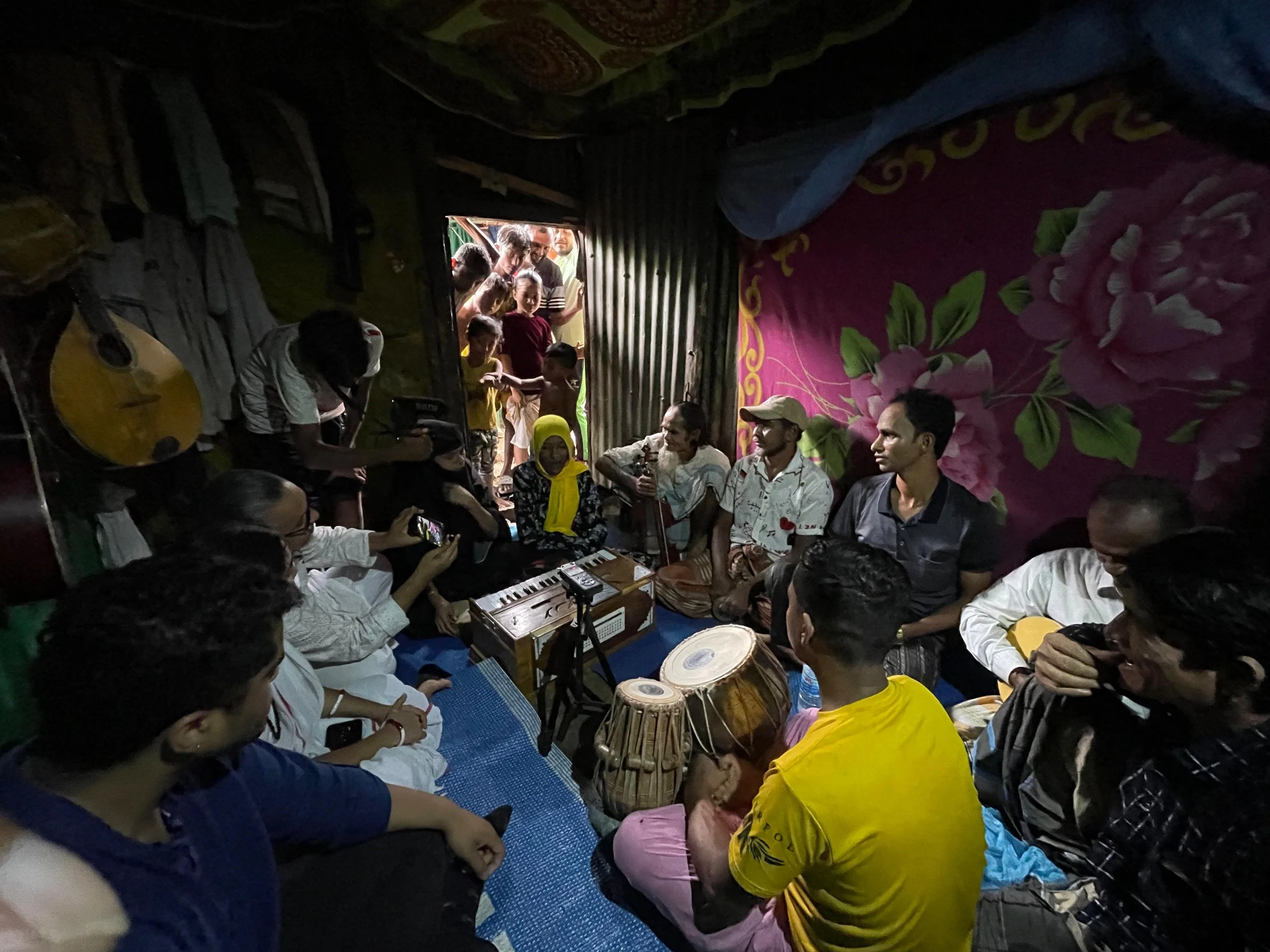
While studies and news articles abound regarding the Rohingya people, these publications overwhelmingly frame Rohingya individuals and the Rohingya people at large as objects of subjugation and recipients of humanitarian aid. For all their merits, these publications often miss the other side of the Rohingya story—that is, the story of Rohingya agency, creativity, and subjectivity. The Koomiyot Project seeks to address this gap by centering the many ways in which Rohingyas themselves understand, articulate, embody, and propagate their national identity through practices of language and the performing arts.
Components
Navigate the pages on this website to learn more about the following components of the Koomiyot Project:
[Doctoral Dissertation] Tarana: Islam, Nationalism, and Song amid the Rohingya Catastrophe
[Studio Album] Aáñra Hóilam Ruwáiṅga Zati
(We Are the Rohingya People)[Documentary Film] Osman: Limbor Gan
(Osman: Singing in Limbo)[Academic Symposium] “Liminal Encounters: Counternarratives of Rohingya Refugees” (23–24 January 2026)
[Community-Led Organization] The Rohingya Performing Arts Center (RPAC)